
Free Quitclaim Deed Form
Transfer property rights without the delays of a full sale. Build your quitclaim deed form in minutes with Document Genius’s guided questionnaire.
- Duration 4 min
- Download as PDF and Word
- E-sign included
Monday - Friday 9AM – 6PM EST
Document Genius Real Estate Quitclaim Deed
Transfer property rights without the delays of a full sale. Build your quitclaim deed form in minutes with Document Genius’s guided questionnaire.
Written by
Josh Sainsbury
Written by
Josh Sainsbury
Josh Sainsbury is a business content editor specializing in legal writing, with a degree in magazine journalism from Southampton Solent University and extensive experience creating clear, accessible resources for legal and business audiences.
Full Bio
|
Attorney-Reviewed by
Harvey Barbee, J.D.
Attorney-Reviewed by
Harvey Barbee, J.D.
Harvey Barbee is an experienced attorney with over 15 years of practice in family, criminal, personal injury, and civil litigation, holding degrees in political science and law from the University of North Carolina and actively serving clients across North Carolina.
Full Bio
Select your state to match local deed and recording requirements.
Fill in the grantor, grantee, property details, and consideration.
Download your quitclaim deed as a PDF or Word file, ready to sign and record.
A quitclaim deed is a legal document that transfers whatever ownership interest the current owner has in a property to someone else. Unlike a sale deed, it does not promise the title is clear, or even that the grantor truly owns the property.
Because of that limited protection, a quitclaim deed form is usually best when there’s already trust between the people involved.
People sometimes say “quick claim deed,” but the correct term is quitclaim deed (or “quit claim deed”).
Both documents can transfer real estate, but they protect the buyer (grantee) very differently:
Tip: If you’re buying property, you usually want a warranty deed plus a title search or title insurance. A quitclaim deed form is rarely the right fit for a purchase.
A quitclaim deed form works best when the transfer is simple, and both sides understand the risks.
Common situations include:
A quitclaim deed doesn’t remove debts tied to the property. For example, liens can still attach to the home, which may affect the new owner.
A quitclaim deed is short, but small errors can slow down recording. Document Genius’s guided form helps you cover the key details in the right order.
Start with the date you plan to sign the quitclaim deed form. In most cases, the transfer becomes part of the public record once you record it with the county.
You’ll list:
Double-check legal names, spelling, and addresses. Also, confirm how the grantee will hold title (for example, alone or with someone else), since formatting can vary by state.
Most quitclaim deed forms require:
Tip: If you do not have the legal description, you can usually find it on a prior deed or through your local recorder’s office.
“Consideration” is what’s being exchanged. In many family transfers, it’s listed as $0 or a nominal amount (like $1), depending on state norms.
Most states require a quitclaim deed form to be signed in front of a notary. Some states also require witnesses.
If you’re unsure what your state needs, check your local recorder or county clerk guidance through USAGov’s local government directory.
Recording makes the ownership change public and helps protect the grantee’s claim. You typically file the signed, notarized quitclaim deed with the county recorder (or clerk) where the property is located.
Tip: Recording fees, formatting rules, and required cover sheets vary. If your deed gets rejected, it’s often because of a formatting issue, a missing notary block, or an incomplete legal description.
Define key terms, responsibilities, and conditions for your real estate deal.
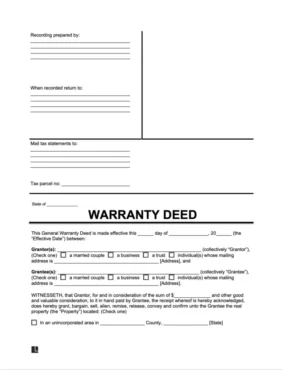
Transfer real property with clear title warranties using a free, state-specific warranty deed you can complete online and download instantly as PDF or Word.
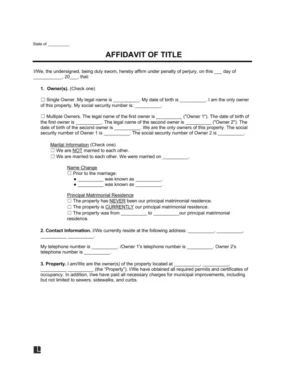
Use to verify legal ownership of real property and disclose any liens, claims, or title issues before a sale or financing transaction.

One place to build, sign, and manage documents.