
Free Firearm Bill of Sale Template
Record a private firearm transfer clearly and responsibly. Build a legally sound bill of sale in minutes with our customizable template.
- Duration 3 min
- Download as PDF and Word
- E-sign included
Monday - Friday 9AM – 6PM EST
Record a private firearm transfer clearly and responsibly. Build a legally sound bill of sale in minutes with our customizable template.
Written by
Josh Sainsbury
Written by
Josh Sainsbury
Josh Sainsbury is a business content editor specializing in legal writing, with a degree in magazine journalism from Southampton Solent University and extensive experience creating clear, accessible resources for legal and business audiences.
Full Bio
|
Attorney-Reviewed by
Harvey Barbee, J.D.
Attorney-Reviewed by
Harvey Barbee, J.D.
Harvey Barbee is an experienced attorney with over 15 years of practice in family, criminal, personal injury, and civil litigation, holding degrees in political science and law from the University of North Carolina and actively serving clients across North Carolina.
Full Bio
Start with your state so your form matches local requirements.
Add buyer, seller, firearm details, and transfer terms.
Download as PDF or Word, then sign and keep copies for your records.
A firearm bill of sale records the transfer of a firearm from one person to another. It typically includes the buyer and seller’s names, the firearm’s make and model, the serial number, the transfer date, and the agreed price.
This record helps both parties keep proof of when ownership changed. For example, if the firearm is later lost, stolen, or traced in an investigation, the bill of sale can help clarify responsibility.
A firearm bill of sale is a private record between the buyer and seller. ATF Form 4473 (Firearms Transaction Record) is used when a Federal Firearms Licensee (FFL) transfers a firearm to a non-licensee and supports the required background check process.
Even if your transfer goes through an FFL, keeping a bill of sale can help you maintain your own records.
A firearm bill of sale is most commonly used for private transfers where state law allows them. Even when it is not legally required, it helps document the terms and timing of the transfer.
It is especially useful in states with additional rules, such as background checks, waiting periods, permits, or registration. If you are unsure what applies, review your state requirements before completing the transfer.
The Bureau of Alcohol, Tobacco, Firearms, and Explosives (ATF) also outlines best practices for private sellers. You can review its guidance on best practices for private firearm transfers.
A clear firearm bill of sale is factual, complete, and easy to verify later. Keep the language simple and make sure it aligns with any related paperwork required in your state.
Firearm laws vary by state, and federal rules may also apply. If either party lives in a different state, the transfer typically must go through an FFL in the recipient’s state.
List the seller’s full legal name and current address. Many people also include contact details so questions can be resolved later if needed.
Enter the buyer’s full legal name and address. Matching the format used for the seller helps keep the document consistent and easy to review.
Identify the firearm clearly so it cannot be confused with another item. Include the make, model, caliber or gauge (if applicable), and serial number.
Record the agreed price, the payment method, and the date of transfer. If the firearm is being transferred as a gift, clearly state that the price is $0.
Note the firearm’s condition and list any items included in the transfer, such as a case or accessories. Keep this section short and objective.
Both parties should sign and date the bill of sale. Each person should keep a copy in a safe place for future reference.
Notarization is usually optional, but it can add an extra layer of verification. If you choose to notarize, you may also include a notary acknowledgment.
Record the transfer of ownership for vehicles, property, or personal goods with clarity.
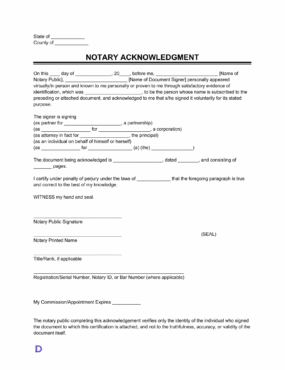
Confirm a signer’s identity and voluntary signature with a free notary acknowledgment form you can complete, download, and notarize with confidence.
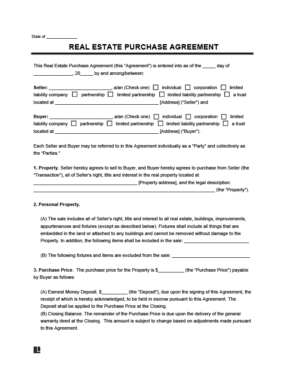
Helps buyers and sellers document simple transactions clearly, from price to signatures.
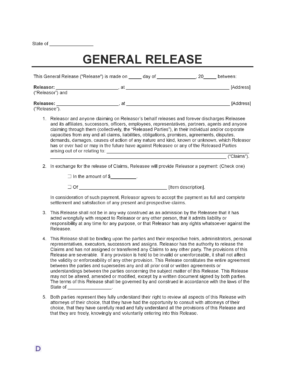
Protect yourself or your business by waiving legal claims in case of accidents or injuries.
Define loan repayment terms, interest rates, payment schedules, and more for various loan types.

One place to build, sign, and manage documents.