Free Construction Change Order Form
Keep construction projects on track when plans change. Create a clear, legally sound construction change order with Document Genius’s customizable template.
- Duration 4 min
- Download as PDF and Word
- E-sign included
Monday - Friday 9AM – 6PM EST
Document Genius Business Construction Contract Change Order
Keep construction projects on track when plans change. Create a clear, legally sound construction change order with Document Genius’s customizable template.
Written by
Josh Sainsbury
Written by
Josh Sainsbury
Josh Sainsbury is a business content editor specializing in legal writing, with a degree in magazine journalism from Southampton Solent University and extensive experience creating clear, accessible resources for legal and business audiences.
Full Bio
|
Attorney-Reviewed by
Harvey Barbee, J.D.
Attorney-Reviewed by
Harvey Barbee, J.D.
Harvey Barbee is an experienced attorney with over 15 years of practice in family, criminal, personal injury, and civil litigation, holding degrees in political science and law from the University of North Carolina and actively serving clients across North Carolina.
Full Bio
Select the construction change order template to get started.
Describe the change, cost impact, and timeline updates.
Download your change order as a PDF or Word file.
A construction change order is a written update to an existing construction agreement. It documents changes to the scope of work, price, timeline, or all three after a project has already started.
Change orders protect both sides by putting updates in writing and confirming that everyone agrees before moving forward. Once signed, the change becomes part of the original construction contract.
There are two common types of change orders:
Most construction contracts include a clause explaining how changes must be handled. Using a written change order helps avoid disputes later.
Change orders should improve the project, not rewrite it entirely. A change order should not:
Clear limits help prevent scope creep and keep the project aligned with its original goals.
Use a construction change order whenever the original agreement needs updating after work begins.
This often happens when:
Change orders also help when reducing scope to cut costs. By documenting changes clearly, both parties stay aligned, and updates remain enforceable.
Contract type can affect how changes are handled:
Clear documentation matters. Vague or unsigned change orders can lead to payment disputes or delays. Follow these steps to create a clean, accurate change order.
While some courts may recognize verbal changes if both parties act on them, relying on oral agreements creates risk. Most construction contracts require changes to be documented in writing. A written form helps show exactly what was agreed to.
List the full legal names of the contractor and the client. This makes it clear who is responsible for the work and who is approving the change.
Include enough information to tie the change to the correct project:
Accurate project details help prevent mix-ups and costly mistakes.
Explain exactly what is changing using clear, specific language.
Good example:
Replace single-pane windows with energy-efficient windows.
Poor example:
Window update.
Specific descriptions reduce confusion and help prevent future disputes. If you attach a detailed breakdown or supporting document, note that clearly.
State whether the change affects the contract price. If it does, list the updated amount and explain any new payment terms.
Clear pricing updates help both sides agree on the revised budget and reduce billing issues later.
Note whether the change affects the project schedule. If so, specify how many days are added or removed.
Clear timeline updates help keep crews, vendors, andindependent contractors aligned with the revised schedule.
Select the state law that applies to the change order. Construction rules vary by state, and choosing the correct law helps determine how the change is enforced.
For example, some states require change orders to be signed before work begins for the contractor to collect payment. Always check state-specific requirements through official government or court sources.
Add the date the change was approved, then have both the contractor and the client sign.
Once signed, the change order becomes part of the original agreement and serves as a binding record of the updated work, cost, and timeline.
Written change orders help avoid disputes by creating a clear paper trail. Courts often enforce the terms of a construction contract as written, including notice and approval requirements. Skipping required steps can result in denied payment or legal costs.
Always provide written notice and get approval before performing extra work. This helps protect your right to payment and keeps the project moving smoothly.
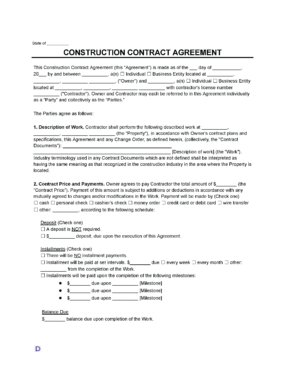
Define project details, payment schedules, and deadlines between owners and contractors with precision.
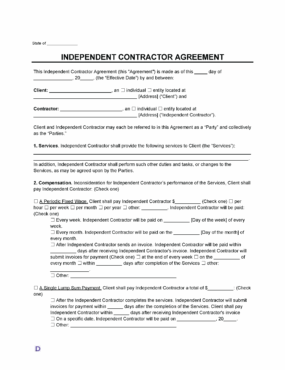
Outline the working relationship between clients and contractors, including scope of work and payment terms.

One place to build, sign, and manage documents.